Special Times

For a photographer there are a few magical times of day. Times when a subject can come alive with light. During most of the daylight hours the Sun shines brightly down on us. It casts harsh shadows, creating large amounts of contrast between subjects which are lit and subjects which are in almost darkness. What makes the hour before sunset and the hour after sunrise so special is that the world is lit from the side. Leaves come alive and dance when the Sun shines on them this way. This willow tree caught my attention one evening last week when the golden beams of sunlight caused it to shimmer. Have a great weekend!

Nikon D800 Sigma 85mm f/1.4 @ f/16  ISO 100 1/13 sec

An Evening Walk

I enjoy hiking, but hiking in the Spring requires a different mindset. When I’m walking in the woods I’m usually looking for things to photograph, wildlife, vistas, sunsets, etc. That means I’m carrying gear with me. Not hiking gear if I’m out for a short walk, but heavy lenses, tripods, cases, and other paraphernalia. In the Autumn or Winter wearing protective clothing is not only essential, but comfortable. Long pants to stay warm in winter, repel poison foliage in the Spring. Hats to keep ears warm in the cold function to keep falling ticks out of my hair in the warmer bug infested forests, are just a few of the items that make Spring hiking quite a different experience. Boots become mired in mud and gook from waterlogged trails, hats become collectors of sweat, and long pants just seem like torture when shorts would be so much more comfortable. I’ll keep at it of course. Well protected and prepared. The rewards outweigh the minor inconveniences, don’t you think?

​Nikon D800 Tokina 16-28mm f/2.8 @ 16mm f/16 ISO 100 9 image HDR 

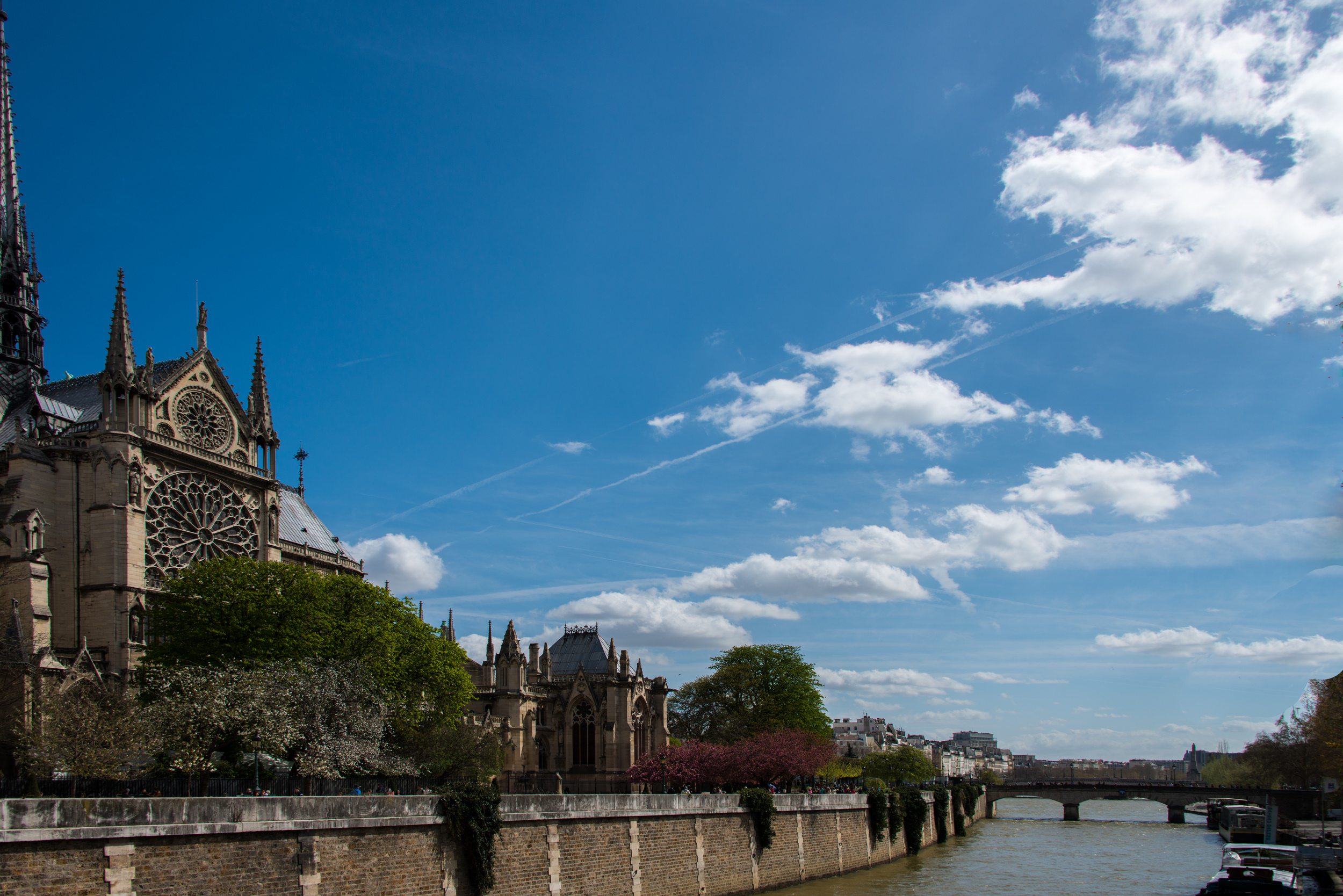
#TravelTuesday Notre Dame

Happy 850th birthday to “Our Lady of Paris”. Long ago in 1163 the first stones were laid for the construction of a gothic style cathedral in Paris. Work continued for over 150 years and since “completion” rebuilding and reconstructing has occurred on numerous occasions. For the full history you can check out the Cathedral of Notre Dame website, because this is not a history lesson.

Living in America our history is very short compared to Europe. The ages of our churches in the “new world”, even the old ones, span a century, or maybe two. Most of the original places of worship built here were small. They gave sanctuary to a few dozen people. There was no need for giant buildings. The importance of religion in early American settlements cannot be understated. For many people it was the entire reason for the arduous journey across the Atlantic. It seems obvious that the people coming here felt that the God they worshiped did not need giant edifices in which to dwell, he would be just as comfortable in a country church as a grand cathedral. I know many artists work “for the glory of God”, and it shows in their art, and maybe that’s what inspired the architects, builders, and craftsmen centuries ago. I have been inside the National Cathedral in Washington DC, Saint Peter and Paul’s Cathedral in Philadelphia, and several large churches in the United States and the feeling is daunting. There is a power and grandeur emanating from these holy structures. For example, I could shout from the rear of the church and wait long seconds for the echoes to return. They would sound like soft reverberations that have been delayed by a higher power and would envelop me in whispers. The size and scale of the room would seem impossible, and I would feel small and humbled. Maybe that’s what the planners had in mind.
Abroad, in Notre Dame Paris, St. Stephen's in Vienna, and Westminster Abbey in London, the same reverence exists, but deeper. There’s a sense of the ancient, the long forgotten, the blood sweat and tears of the laborers. There’s the odor of age, the coagulation of dust and condensation laying in hard to reach places. There are dates that bend the mind’s sense of time etched in the walls. And beneath it all lies the hallowed ground of graves and crypts of mighty men who changed the course of history. I can’t describe the wonder and feeling adequately; you’ll have to go.

Nikon D800 Nikkor 28-300mm f/3.5-5.6 @ ​28mm f/6.3 ISO 100, 3 image panorama

The Long Wait to Die

The picture below is of a local Christmas tree farm. I thought the pattern of the trees beneath the drama in the sky deserved a picture. Then I started thinking about the trees. I really enjoy Christmas; it’s one of my favorite times of year. I have had real trees that I decorated to celebrate the holiday season in the past but I haven't for a few years now. I have a smaller pre-lit (4’) “fake” tree that my wife and I decorate shortly after Thanksgiving. I talked myself into the artificial tree with arguments such as the ease of care, the lack of mess, even the “If I miss the evergreen smell, I can light a scented candle” rationalization.

I don’t want to get all tree hugging fanatical, but it’s kind of strange how we treat the Christmas tree. I realize it’s not the same as farming livestock, or fish to eat as food, but it isn’t the same as harvesting wheat or grain for nourishment either. The Christmas tree exists for our entertainment; at least that’s the only purpose I can see for inviting one into our home. It’s few weeks of green luster and aromatic pines dwindle, and it is irreverently disposed of in the trash.

In my youth the Christmas tree represented the coming of the holidays, the warmth of family, the joy of friends, the anticipation of gifts and the singing of carols. Today, maybe I‘ve realized that emotion rests within me and I have no need for a dying tree to awaken it anymore.

Nikon D800 Sigma 85mm f/1.4 @ 85mm f/16 ISO 100 1/15 sec.​